Living with rheumatoid arthritis (RA) means that each morning can bring its own set of challenges, especially in the form of joint pain and stiffness. However, incorporating a gentle morning stretching routine can provide relief, help to improve mobility, and reduce discomfort. This 5-minute stretch sequence is specifically designed for individuals with RA, ensuring that the movements are safe, effective, and gentle on the joints. In this guide, we will expand on the importance of morning stretches, go into greater detail about each stretch, and provide tips to make the process easier and more beneficial for you.

Key Takeaways:
- Quick, 5-minute routine designed for RA patients
- Gentle stretches to ease morning stiffness and joint pain
- Safe, low-impact movements focused on reducing inflammation and improving flexibility
- Easy to incorporate into your daily routine to promote long-term joint health
Understanding Morning Joint Pain in RA
Morning stiffness and pain are hallmark symptoms of rheumatoid arthritis. This inflammation affects the lining of the joints, causing pain, swelling, and limited movement, especially after waking up. For many people, the morning can be the most difficult time of day as joints may feel tight, and mobility can be restricted.
While RA is a chronic condition, regular stretching can improve joint flexibility, help reduce stiffness, and enhance overall physical function. Stretching not only aids in physical relief but also promotes blood circulation to the affected areas, leading to faster recovery and decreased discomfort.
Benefits of Stretching for RA Patients:
- Improves Flexibility: Regular stretching helps improve the range of motion in stiff joints.
- Reduces Pain and Swelling: Movement can stimulate synovial fluid production, helping lubricate the joints.
- Enhances Mobility: A consistent stretching routine can prevent the loss of movement in affected joints.
- Boosts Mood and Energy: Stretching releases endorphins, which are natural mood boosters, helping you feel energized and more positive.
The 5-Minute Gentle Morning Stretch Routine for RA
The following stretches have been carefully selected to ensure they are gentle on the joints while helping to ease discomfort, improve circulation, and increase mobility. Perform each stretch slowly and listen to your body—stop if you feel any pain, and avoid pushing through discomfort.
1. Gentle Joint Warm-up (1 Minute)
Objective: To gently warm up the joints and prepare them for further movement. This exercise will help reduce stiffness and increase blood flow.
How to Do It:
- Sit in a comfortable chair with your feet flat on the floor and posture straight.
- Start with your fingers and wrists: Make small circles in each direction for 15 seconds.
- Move on to your elbows and shoulders: Perform small, controlled circles in both directions.
- Next, focus on your ankles and knees, making controlled circles in both directions.
Key Points:
- Keep movements small and controlled to avoid straining the joints.
- Focus on deep breathing throughout this warm-up to help relax your body.
2. Upper Body Relief (1 Minute)
Objective: To relieve tension in the arms, wrists, and shoulders. This stretch helps increase blood flow to these areas, reducing stiffness and promoting mobility.
How to Do It:
- Sit with your back straight and your feet firmly on the ground.
- Raise your arms to shoulder height and gently rotate your wrists in both directions.
- Open and close your hands slowly, stretching the fingers.
- Roll your shoulders forward in a circular motion, then backward, focusing on easing tightness in the upper body.
- Repeat the sequence three times.
Key Points:
- Don’t force any rotations; they should be gentle and controlled.
- Keep your shoulders relaxed and avoid lifting them toward your ears.
- Breathe deeply and consistently to aid in relaxation.
3. Mid-Back Release (1 Minute)
Objective: To release tension in the upper and mid-back, which is often a problem area for RA patients. This stretch helps improve spinal flexibility and reduces discomfort in the back and shoulders.
How to Do It:
- Sit up straight in a comfortable chair.
- Place your hands on your shoulders and gently rotate your upper body to one side, keeping your hips and lower body still.
- Hold the rotation for 5 seconds, then slowly return to the center.
- Repeat this on the other side.
- Complete 3 repetitions on each side.
Key Points:
- Move slowly to avoid sudden jerking or twisting motions.
- Keep your head aligned with your spine, avoiding any strain on your neck.
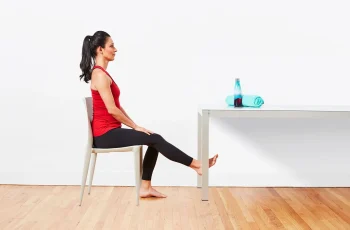
4. Lower Body Ease (1 Minute)
Objective: To loosen up the lower body, particularly the hips, knees, and ankles. This stretch helps alleviate discomfort and stiffness in the legs, which are often affected by RA.
How to Do It:
- Sit in a comfortable position with your feet flat on the floor and posture straight.
- Extend one leg forward and gently flex and point the foot.
- Make small circles with the ankle in both directions.
- Repeat this with the other leg.
- Perform 3 repetitions for each leg.
Key Points:
- Keep movements small and gentle, especially if you have swollen ankles or knees.
- Avoid overextending the foot, and focus on controlled movements.
5. Full Body Relaxation (1 Minute)
Objective: To fully relax your body, release any remaining tension, and prepare for the rest of your day.
How to Do It:
- Sit comfortably with your back straight.
- Take deep, slow breaths in and out, focusing on your breathing.
- Gently shake out your limbs to loosen up any remaining stiffness in the arms and legs.
- Roll your neck slowly in both directions to release tension.
- Let your shoulders drop and relax as you breathe deeply.
Key Points:
- Keep the movements gentle to avoid straining any muscles or joints.
- Focus entirely on your breath to help calm your body and mind.
Preparing for Your Morning Routine
Best Time to Stretch:
- After a warm shower: The heat will help loosen your muscles and joints, making stretching more effective.
- When morning stiffness begins to decrease: Aim to stretch once you notice the stiffness lessening but before the pain sets in.
- Before taking medications: Stretching before medication can help alleviate discomfort during the early part of the day.
- When you feel most comfortable: Everyone’s body is different, so it’s important to pay attention to when you feel best to stretch.
Creating the Right Environment:
- Find a quiet, comfortable space: A calm and peaceful environment helps reduce stress and makes stretching easier.
- Use a supportive chair: If sitting, ensure that your chair provides enough back support to maintain good posture.
- Stay hydrated: Keep a bottle of water nearby to stay hydrated during your routine.
- Wear comfortable clothing: Ensure your clothing doesn’t restrict movement and is soft on the skin.
Common Mistakes to Avoid
While this routine is designed to be gentle, there are a few common mistakes that can hinder your progress or potentially cause discomfort. Avoid these mistakes to ensure you’re getting the most out of your stretching routine:
- Rushing Through Stretches:
- Take your time with each movement to ensure proper form and avoid injury.
- Don’t skip stretches, even if you’re feeling rushed.
- Forcing Movements:
- Never force a stretch, especially when dealing with RA. If something feels painful or uncomfortable, stop immediately.
- Ignoring Pain Signals:
- Pay attention to your body. If you experience sharp pain, stop the stretch and consult with your healthcare provider.
- Poor Form:
- Always maintain proper posture and alignment to prevent strain on other parts of the body.
Modifying the Routine for Flare-Ups
During flare-ups, you may need to adjust your stretching routine to avoid aggravating your symptoms. Here are a few tips for modifying the routine:
- Reduce the intensity: Focus on gentle, passive movements.
- Decrease the duration: Instead of 1 minute per stretch, try shorter intervals, such as 30 seconds.
- Focus on gentler movements: Avoid any deep stretches or large movements.
- Consider alternative exercises: Gentle water exercises or yoga can be helpful when flare-ups are severe.
Frequently Asked Questions
How often should I do this routine?
Try to incorporate this 5-minute routine into your daily routine. During flare-ups, you may need to reduce the frequency or intensity.
What if I experience pain during stretching?
Stop immediately. Rest the area, apply ice if swelling occurs, and consult with your healthcare provider if pain persists.
Can this routine make my RA worse?
When performed gently and correctly, this routine should improve mobility and reduce pain. Always stop if you feel pain or swelling.
Can I modify the routine for my needs?
Yes, you can adjust the intensity and duration based on your comfort level and symptoms.
Conclusion
By incorporating this 5-minute morning stretching routine into your daily life, you can help ease joint pain, improve flexibility, and reduce the stiffness that comes with rheumatoid arthritis. With patience, consistency, and a gentle approach, this routine can be a helpful tool in managing your RA symptoms. Start your mornings with these stretches and enjoy a greater sense of mobility and well-being.