Introduction
Rheumatoid arthritis (RA) is a chronic autoimmune condition that affects the joints, leading to inflammation, stiffness, and pain. One of the most common symptoms of RA is morning stiffness, which can make starting the day difficult, particularly for those with limited mobility. Gentle morning stretches are an effective way to reduce stiffness, improve joint mobility, and promote overall well-being for RA patients. This article focuses on a seated stretch routine tailored for those with limited mobility, offering a safe and manageable approach to morning exercise.
The goal of this guide is to provide a structured and easy-to-follow morning stretch routine for individuals living with severe RA or limited range of motion. By integrating these gentle stretches into your daily routine, you can experience improved joint function, reduced pain, and a better start to your day.
Key Takeaways:
- A complete seated stretch routine designed for RA patients
- Emphasis on safety, proper form, and gradual progression
- Adaptation strategies for individual needs
- Tips for monitoring progress and maintaining consistency
Benefits of Seated Stretches for RA Patients
Seated stretches are particularly beneficial for individuals with rheumatoid arthritis who may find standing or traditional stretching exercises challenging. The advantages of a seated stretch routine include:
- Reduced risk of falls: Remaining seated minimizes the risk of injury, which is especially important for those with balance issues.
- Improved flexibility: Regular stretching increases flexibility in the joints, reducing stiffness and promoting mobility.
- Reduced morning pain: Morning stretches can alleviate the discomfort and stiffness that many RA patients experience upon waking.
- Increased circulation: Stretching helps improve blood flow to affected areas, promoting joint health and reducing inflammation.
With proper techniques, these gentle movements can make a significant difference in daily mobility and overall quality of life for RA patients.
Seated Stretch Routine for Rheumatoid Arthritis
1. Warm-Up Phase (5 minutes)
The warm-up phase is essential to prepare the body for exercise and prevent injury. Focus on deep breathing and relaxing your muscles.
Key Steps:
- Sit comfortably: Find a sturdy chair with good back support. Place your feet flat on the ground, hip-width apart.
- Deep breathing: Inhale deeply through your nose, allowing your chest and abdomen to expand. Exhale slowly through your mouth, releasing tension with each breath.
- Relax shoulders: Allow your shoulders to drop away from your ears as you take slow, deep breaths.
Safety Tips:
- Start at a slow pace and stay within your comfort zone.
- Ensure proper posture throughout to prevent additional strain.
- If you feel any pain, stop and reassess your form.
2. Upper Body Stretches (10 minutes)
Upper body stretches are vital for loosening up the shoulders, arms, and neck, areas commonly affected by RA.
Shoulder Rolls
- Sit tall with a straight spine.
- Roll your shoulders forward in small, controlled circles.
- After 5 forward rolls, switch direction and roll your shoulders backward.
Arm Circles
- Extend both arms out to the sides at shoulder height.
- Make small, controlled circles with your arms, gradually increasing the size of the circles.
- Switch directions after 5 repetitions.
Safety Tips:
- Keep your movements small and controlled.
- Avoid overstretching or jerking your arms.
- If you experience pain in your shoulders or arms, reduce the intensity of the circles.
3. Core and Back Stretches (10 minutes)
Core and back stretches can help reduce stiffness in the spine and improve flexibility in the upper body.
Seated Twists
- Sit with a tall, upright posture.
- Place your hands on your shoulders and gently twist your torso to one side.
- Keep your movements small and controlled, focusing on the stretch across your back and shoulders.
- Repeat on the other side.
Side Stretches
- Sit tall with your feet flat on the floor.
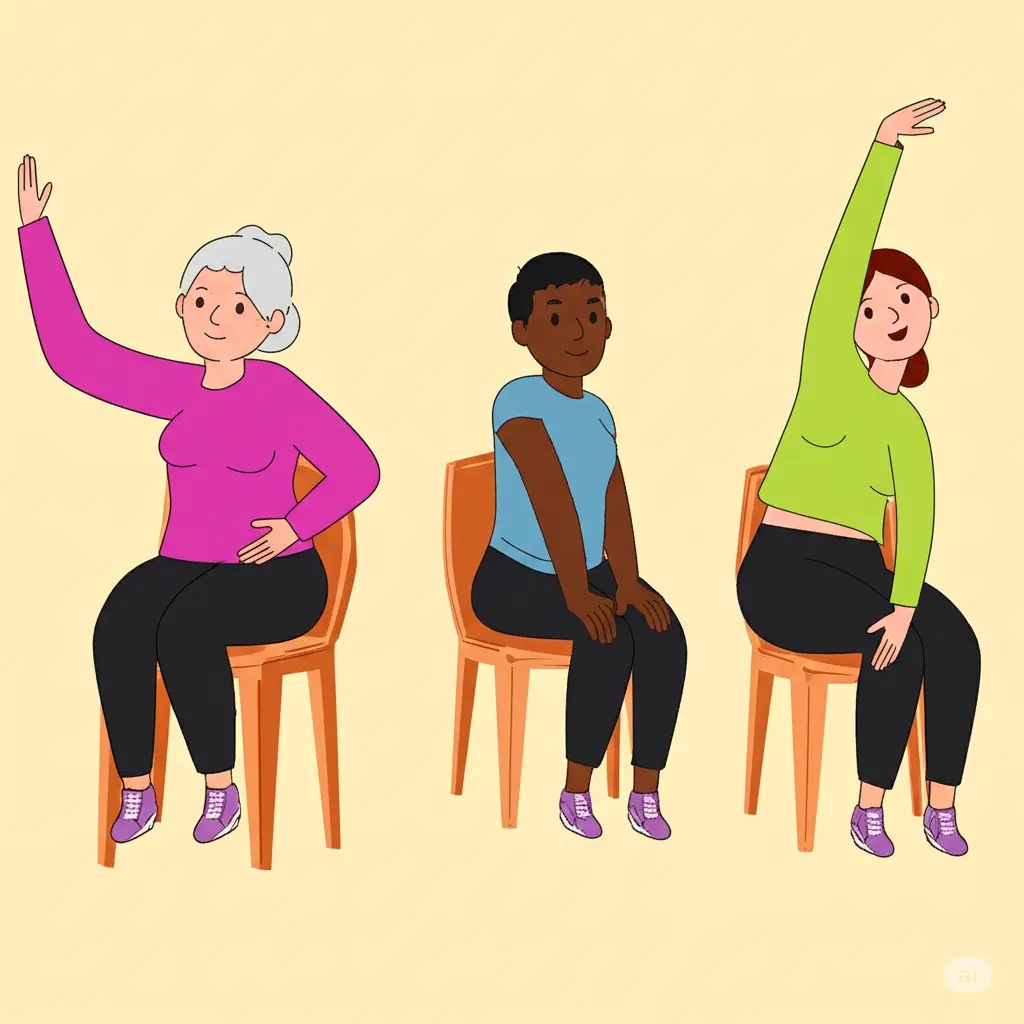
- Reach one arm overhead and gently lean to the opposite side, feeling a stretch along your side and torso.
- Hold for a few seconds before returning to the starting position and switching sides.
Safety Tips:
- Move slowly and avoid any sudden twisting motions.
- Focus on feeling a gentle stretch, not pain.
- If your back is very stiff, use a cushion or bolster to support your lower back.
4. Lower Body Stretches (10 minutes)
Lower body stretches help maintain flexibility in the legs and promote healthy circulation.
Ankle Pumps
- Sit with your legs extended forward.
- Point and flex your feet slowly, stretching your calves and ankles.
- Repeat 5 times for each leg.
Knee Lifts
- Sit with your feet flat on the floor.
- Slowly lift one knee toward your chest, keeping your movements gentle and controlled.
- Lower the knee back down and repeat with the other leg.
Safety Tips:
- Move slowly and avoid jerking motions.
- Focus on form, keeping your posture upright during each stretch.
- If you experience knee pain, adjust the range of motion.
5. Cool-Down Phase (5 minutes)
The cool-down phase helps the body transition from stretching back to a state of rest.
Key Steps:
- Sit comfortably in your chair with a straight back.
- Continue deep breathing, inhaling and exhaling deeply to relax your body.
- Focus on releasing any remaining tension in your shoulders, neck, and back.
Safety Tips:
- End each session gently, allowing your muscles to relax fully.
- Breathe deeply and slowly to help your body cool down.
- Avoid rushing the cool-down phase; it’s essential for muscle recovery.
Adaptation Strategies for RA Patients
Everyone’s experience with RA is different, and some individuals may need to adjust their routines based on specific needs or limitations.
1. General Modifications
- Reduce intensity: If certain stretches feel too intense, reduce the range of motion or duration.
- Increase rest periods: Take breaks between stretches if needed.
- Focus on gentle movements: Always prioritize gentleness over intensity, especially if your joints are inflamed.
2. Specific Considerations
- Joint Protection: Use cushions or supports when needed to protect particularly sensitive joints.
- Range of Motion: Avoid pushing your joints too far. Work within your personal range of motion to prevent injury.
3. Progress Monitoring
Tracking your progress is essential to see improvements and stay motivated.
- Keep a journal: Note how you feel before and after each session.
- Use apps: Many fitness apps allow you to track your mobility and pain levels.
- Record your experience: Take photos or videos to monitor your physical progress over time.
Maintaining Consistency and Safety
1. Getting Started
- Start slow: Begin with a few stretches and gradually add more as you feel comfortable.
- Focus on form: Proper posture and technique are essential to prevent injury and maximize the benefits of each stretch.
- Track your progress: Keep a log of your symptoms, mobility, and overall well-being to monitor improvements.
2. Building a Routine
- Set reminders: Use your phone or a calendar to remind yourself to stretch every morning.
- Celebrate small victories: Celebrate progress, no matter how small. Achieving better mobility, even for a few minutes, can significantly improve your quality of life.
3. Overcoming Challenges
RA patients often face challenges such as flare-ups, fatigue, or lack of motivation. Here are some ways to overcome them:
- Morning stiffness: If stiffness is particularly bad, focus on gentler stretches and increase intensity over time.
- Motivation issues: Join online support groups or connect with others who also have RA to share experiences and encouragement.
Conclusion
Seated morning stretches for rheumatoid arthritis patients are a simple yet effective way to alleviate stiffness, reduce pain, and improve mobility. With the right techniques and consistency, you can gradually build strength, flexibility, and confidence, enabling you to better manage your condition and improve your overall quality of life.
By following this seated stretch routine, RA patients with limited mobility can begin their days with less discomfort and a sense of accomplishment. Remember, always listen to your body, start slow, and adjust the routine to suit your individual needs. The journey to better joint health starts with a single stretch – make that stretch count!